.jpeg)
Featured
Physician pays it forward by influencing youth, medical learners to pursue healthcare
— Photo supplied by Dr. Ryan Schaub
Mothers know best.
Rural generalist physician Dr. Ryan Schaub can attest to that after his own mom strongly suggested he pursue a university degree.
Her wisdom bore fruit for Dr. Schaub, and the community of Athabasca, where he now practises, actively encouraging others to consider a career in rural medicine.
In high school, the young man worked construction with his father, building a condominium for local physicians in his home community of Lac La Biche.
When the physicians asked about his future, he responded, “I don’t know. I’m going to university. At least, that’s what my mother says,” recalls Dr. Schaub.
They asked if he had considered medicine and offered to shadow him in their clinic and local emergency room (ER) to get a firsthand look at the profession.
“I saw some small procedures and thought ‘this is really cool’ and ‘I should try to do this.’ Thankfully with some effort and luck, I was able to get in. It’s been a great journey.”
Nearly seven years ago, Dr. Schaub began practicing in Athabasca. His goal was to practice in a rural area, preferably close to his family (about an hour away).
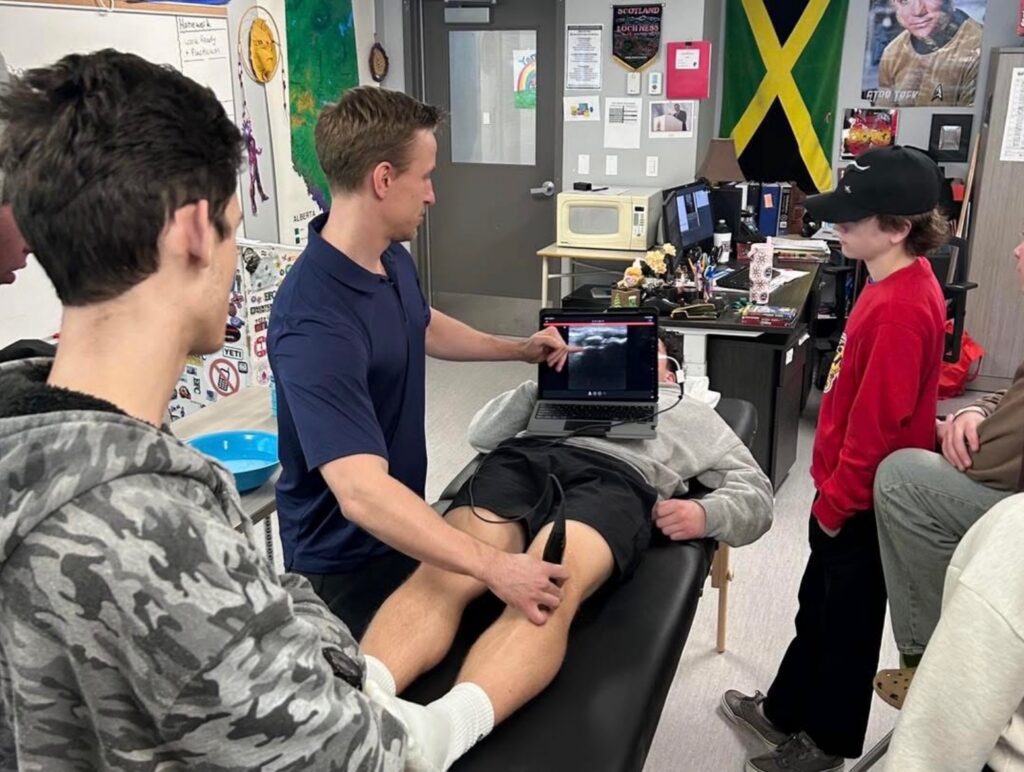
Paying his own experiences forward, he endeavours to influence learners — from high school students to those already carving out their medical paths — by inviting them for mentoring opportunities.
“I try to get them interested and involved early,” says Dr. Schaub, who has previously volunteered for RHPAP Let’s Go Rural! High School events which spun off into Athabasca’s own annual version for local students.
The father-of-three also shares his experiences through the University of Alberta’s Pre-Clinical Networked Medical Education Program (PNME).
“[Medical learners] are in our community for three to four weeks and I’m their main preceptor,” he says.
“It’s going through scenarios and talking through it, going through background medical information, doing physical exam teaching, bedside education, organizing schedules, seeing clinic, long-term care visits, and working with allied health care staff.”
“It gets them used to being in a hospital and working as a team with our lab technicians, X-ray technicians, physiotherapists, RT [respiratory therapist] — all of which I think is highly valuable, especially in rural, where our team members play such an important role.”
Dr. Schaub says community connections are also an important factor in enticing new physicians to a community.
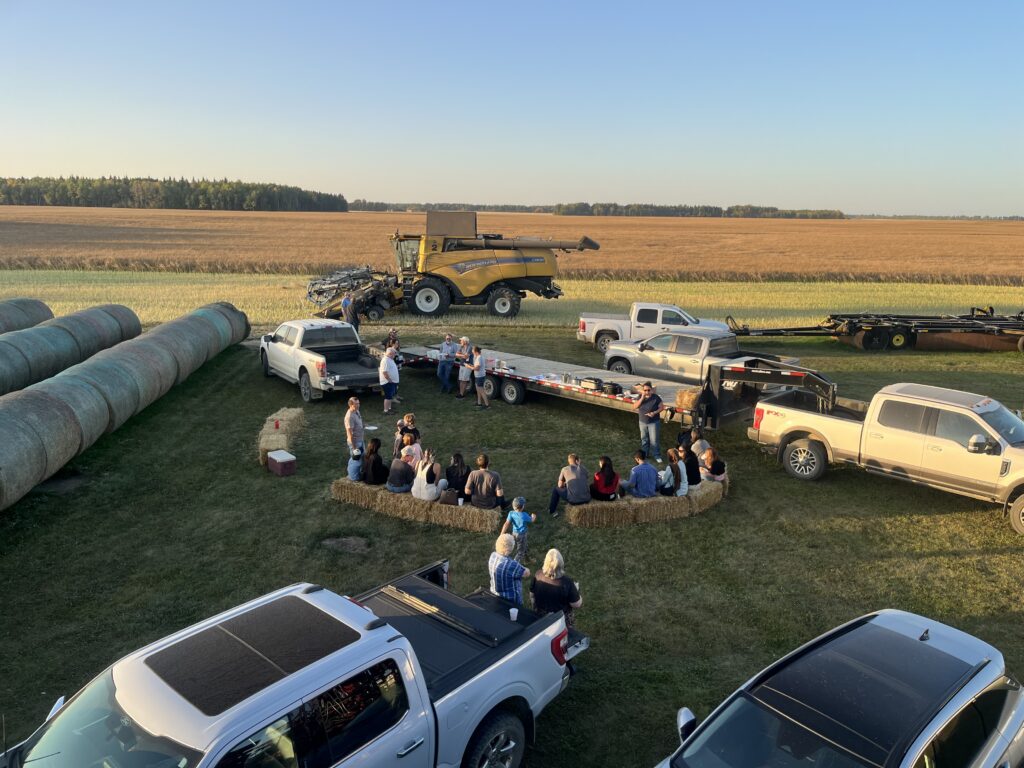
“Community engagement is one of the most fun parts of PNME where we really get our town involved to put on different events, get all the students and the doctors out for some nice community building.”
“We’ve had supper out in the farmer’s field while harvesting. We’ve had boat rides, trips to the golf course, various sporting activities. It’s been great. I really enjoy the PNME time of the year.”
— Photo supplied by Dr. Ryan Schaub
Through his volunteer work with the Regional Health Care Attraction and Retention Committee, he often connects with local leaders as they plan events.
Dr. Schaub is appreciative of RHPAP’s all-round support for rural healthcare.
As a student, he stayed in RHPAP accommodations and now continues to expand his own skills with financial support from RHPAP’s Physician Enrichment Grant Program. The grant provided funding for his training in Musculoskeletal (MSK) Point-of-Care Ultrasound (PoCUS) [EDE2] and the High Acuity Low Opportunity (HALO) Course.
The MSK course helps him quickly identify issues involving hips, knees, shoulders, often saving patients from travelling outside the community for diagnosis or management.
He highly recommends the HALO training noting, “it was one of the best educational sessions I’ve had. I think everyone who practises emergency medicine should have the chance to do it.”
“You’re practising some of those potentially life-saving interventions in the emergency room that you may see once or twice in a career.”
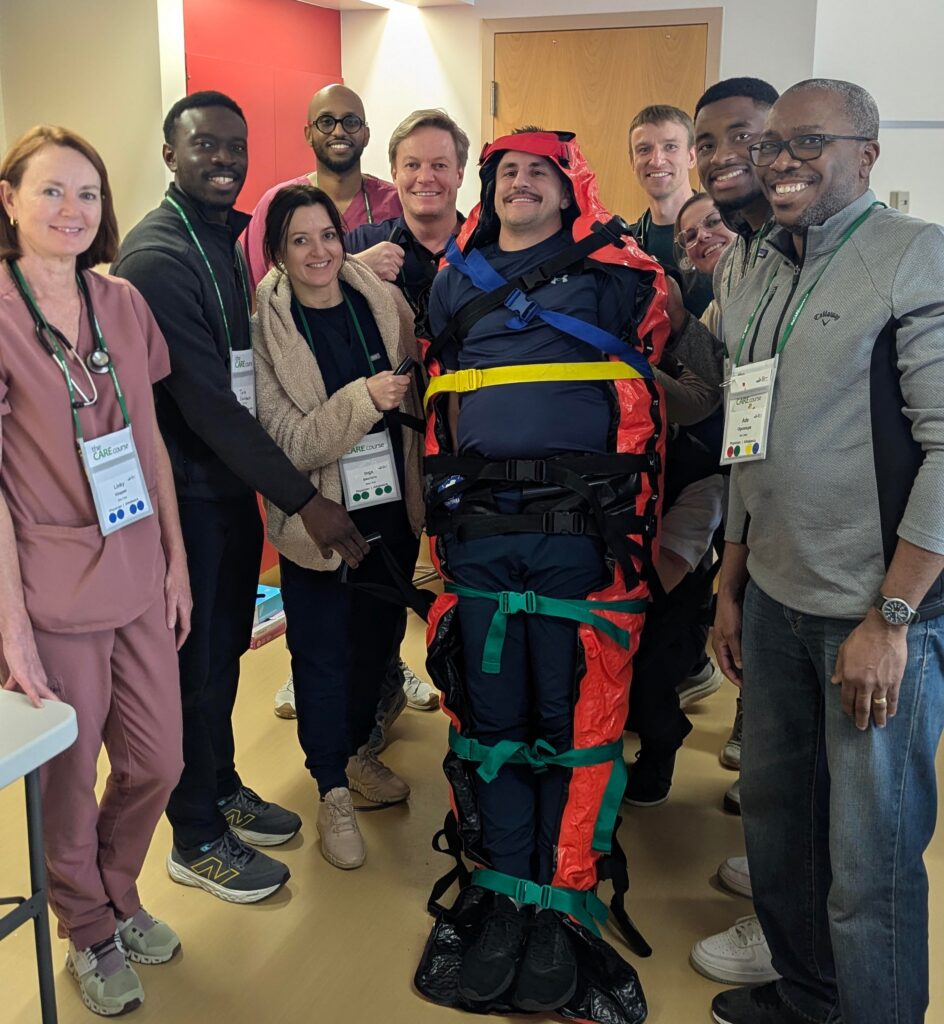
He also pushes to host courses locally through RHPAP’s Rural Education Fund so colleagues can enhance their skills and do team-based training, such as the Emergency Department Echo [EDE2] Resuscitation and Diagnostic courses, and the Comprehensive Approach to Rural Emergencies (CARE) course.
“That was fantastic having a group of physicians, nurses and paramedics from our community all working together, going through emergency scenarios, getting to know each other better.”
“You may eventually have these scenarios or something similar and remember back ‘what did we do then?’
“Then, if we’re all seeing the same thing three times over and practicing together, we will be a better team when the true emergency eventually comes.”