
News
Saluting mentors during Rural Preceptor Recognition Week
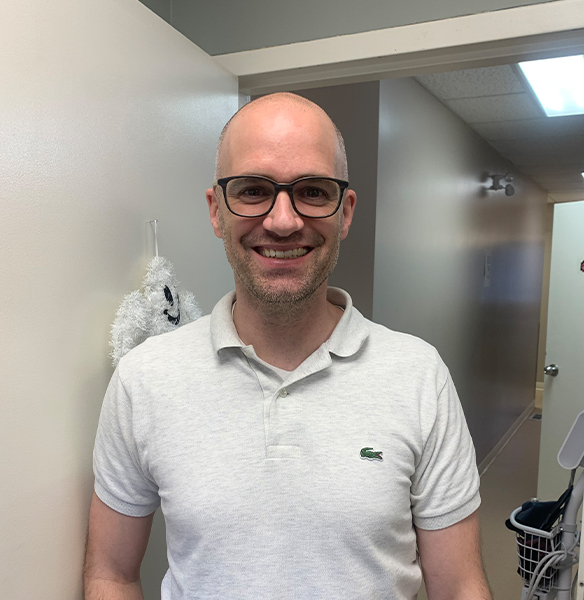
— Photo supplied by Dr. Arne Van Aerde
November 2 to 6, 2026 marks a special week to recognize those who share their knowledge and skills with medical learners as Rural Preceptor Recognition Week.
Here, we learn how a team of Diamond Valley physicians recently rejoined RHPAP’s Rural Mentorship Program in an effort to help enlighten future health professionals and help them consider rural practice before they make major decisions on how and where they want to practise.
Dr. Arne Van Aerde admits having a medical student shadow him during his emergency shifts at Oilfields General Hospital in Diamond Valley can be fun.
“It is energizing for me,” says Dr. Van Aerde, a family physician who has practised medicine in the community for 15 years.
“You can teach students almost anything and everything they see is new.”
Dr. Van Aerde is one of seven Diamond Valley physicians who is a preceptor through RHPAP’s Rural Mentorship Program. His colleagues, Dr. Eric Jablonski, Dr. Yegor Korchemagin, Dr. Noel Grisdale, Dr. Matthew Schuck, Dr. Joe Lemire, and Dr. Tim Dowdall also dedicate their time with the Rural Mentorship Program.
The program is designed for first- and second-year medical students to experience a six-hour shift in a rural emergency department.
A few years back, the physician team at the local clinic, Foothills Family Medical Centre, regularly had medical students come for mentorship opportunities. Earlier this year, Dr. Van Aerde asked if they could restart the program locally.
Cherra Duquette, the clinic’s medical office assistant/resident scheduler, reached out to the physicians for participants and seven members of the team agreed they were up for the task. Preceptors receive an honorarium for each shift as a small way to recognize their time and efforts.
Many of the physicians also participate as preceptors with the University of Calgary’s residency program.
It’s a win-win for the learners and the doctors as they spend time together in the rural emergency department located about an hour southeast of Calgary. The hospital services Eden Valley Reserve, Black Diamond, Turner Valley, Okotoks, Millarville, and Longview.
“It’s great for the students to get a real feel for what it’s like out here, but yet I think it’s really great for the doctors too, because they get humbled to be reminded of what it’s like to just be fresh, eager and interested,” says Duquette.
“It’s a great opportunity because our emergency, being that it’s rural, can be very busy or it can be very slow, and we get a large array of things that go on.”
One medical student was surprised by the scope of practice Diamond Valley doctors experience.
“Spending the day at Oilfields Hospital gave me a much better understanding of the breadth of practice in a rural setting and how physicians can play a diverse role in patient care,” notes one student.
Another learner was surprised by the “close relationship with patients/circumstances you would expect in a family clinic visit becoming apparent in the (emergency department).”
The Diamond Valley team mentors about 10 to 15 medical students a month in the RHPAP program, depending on available physician schedules.
Duquette says scheduling the students is easy, calling RHPAP’s system — coordinated by Tana Findlay with RHPAP’s Strategy and Stakeholders — “a well-oiled machine.”
“The work for me is minimal. I offer the shifts; I track which ones are taken.”
She recommends other clinics jump on board.
“It’s a great opportunity, go for it.”
Dr. Van Aerde remembers his own early medical student experiences, including when he shadowed his older brother, who was a rural physician in Drayton Valley at the time.
“It was quiet, so I put a cast on him, and I tried to put an IV in him, and all this kind of hands-on stuff. So that’s definitely kind of what I try to model.
“Somebody has to teach the next generation, right?”
Slower emergency shifts seem less common nowadays, so the ability to do mock situations isn’t always possible, he says. Dr. Van Aerde ensures the time is worthwhile for learners whether it’s having them take a patient’s history, visit a resident in long-term care, or check in with acute care patients.
“From a personal point of view, it changes your day where you are not just on your own, in your own little world, just seeing one patient after the next.
“You kind of get pushed and challenged, too.”
Related blog posts
Featured
Rural Education Fund